When to Send Wedding Invitations: Plan Your Timeline
Work backward from supplier deadlines and guest travel plans to choose when to send wedding invitations, with a practical example you can adapt.
When to send wedding invitations depends on the decisions your guests need to make and the date you need their answers. Start with your venue or caterer's final headcount deadline, then leave time for guests to reply and for you to follow up. A wedding with international travel may need a different plan from a local celebration.
Use the steps below to build a schedule around your actual bookings. The sample dates are a planning example, not an etiquette rule for the US, UK, Canada or Australia.
Work backward from your final headcount
Ask your venue and caterer when they need confirmed numbers. Check whether meal choices, dietary information, seating plans or accommodation allocations have earlier deadlines. Write down the earliest date that requires guest answers.
Next, choose an RSVP deadline before that date. Leave yourself a realistic follow-up window: enough time to contact people who have not replied, clarify household responses and pass the confirmed information to your suppliers. Choose the size of that window with your suppliers rather than assuming a standard number of days fits every wedding.
Finally, decide how much time guests should have between receiving the invitation and replying. Consider what they must arrange before they can answer, including leave from work, childcare, travel and accommodation.
A worked example
Imagine a wedding on 19 June. In this fictional example, the caterer needs final numbers on 5 June, and the couple chooses 22 May as the RSVP deadline to leave a fortnight for follow-up and corrections.
If they choose to give guests six weeks to reply, they would aim for invitations to arrive around 10 April. That six-week response window is an example choice, not a recommended minimum or universal custom. A travel-heavy guest list could call for earlier notice and a different schedule.
For paper invitations, work backward again from the intended arrival date to allow for production, addressing and delivery. For digital invitations, allow time to finish the details, check the link and contact guests whose invitation may have been missed.
Give travelling guests useful notice
A destination wedding is not the only celebration that involves travel. Guests may cross borders or take long domestic journeys for a wedding in any of the four markets. Think about their arrangements rather than using the wedding's location alone to set your schedule.
Before choosing when to send, ask:
- Will guests need flights, overnight stays or several days away?
- Are there accommodation booking deadlines they should know about?
- Do the dates overlap with holidays or other local events that guests may need to plan around?
- Which details are confirmed enough to share now?
If the date and location are settled but the invitation is not ready, consider an earlier save-the-date message. Explain what is confirmed and when guests can expect the full invitation. Avoid presenting provisional travel or accommodation arrangements as booked.
Keep early notice separate from the RSVP request
An early message can help guests plan without asking them to commit before they have enough information. Make it clear whether you are simply asking them to hold the date or requesting a formal reply.
If you do need an early answer, explain the practical reason and what the guest is being asked to confirm. Ask your suppliers how later changes would be handled before promising guests flexibility.
Send when the essential details are ready
Earlier is useful only if the invitation gives guests enough information to act. Before sending, check the names of those invited, the date, the venue and the time guests should arrive. State which parts of the celebration the invitation covers.
Include a clear RSVP deadline and reply method. Add confirmed information that affects a guest's decision, such as whether the invitation includes their children or a named companion. Personal wording is fine; clarity matters more than following one formal style. Our wedding invitation wording guide can help you assemble the message.
If an important detail is unresolved, decide whether an early notice followed by the invitation would be clearer than sending an incomplete RSVP request.
Does a digital invitation change the timing?
Digital delivery removes the need to plan for a printed invitation's postal journey, but guests still need time to make arrangements and reply. Do not use a fast delivery method as a reason to shorten the response window without considering your guests.
Before sharing your invitation, open it on a phone, read every date aloud and check the reply instructions. Keep a simple record of whom you have contacted so that a missed message does not become a missing RSVP. If you use more than one reply method, bring the answers together before giving suppliers a final count.
Belowen offers digital wedding invitations with RSVP. Explore the templates to choose a design, then build your sending schedule around your wedding details and guests' needs.
Plan follow-up before you send
Put the RSVP deadline and your follow-up window in your own calendar at the same time you choose the sending date. Decide who will contact guests who have not answered, and how you will record any replies received in conversation.
A short personal reminder can repeat the date, the reply link and the deadline without assuming why someone has not responded. See our RSVP reminder wording examples for adaptable messages.
If you are already close to a supplier deadline, contact the supplier about your options and follow up directly with outstanding guests. Do not treat silence as a confirmed yes or no without clarifying the response.
Questions couples ask about invitation timing
Can we send invitations before every detail is final?
You can share an early notice once the date and location are confirmed. For the invitation itself, aim to include enough settled information for guests to understand what they are invited to and how to respond. Clearly label any details that will follow.
Should local and overseas guests receive invitations together?
You can choose one sending date if it gives everyone useful notice. If some guests need much longer to arrange travel, consider contacting them earlier with confirmed planning information. Keep the event details and response instructions consistent across messages.
What if we have not sent a save the date?
Build the invitation schedule from your current position. Consider who needs travel notice, what information is ready and when you need replies. A personal heads-up may help guests who need to start planning while you finish the invitation.
Is there one correct number of weeks before the wedding?
Use your supplier deadlines and guests' arrangements to choose the interval. A fixed number of weeks cannot account for every booking, journey or household. A clear sending date, RSVP date and follow-up plan will give you a more useful schedule than a rule without context.
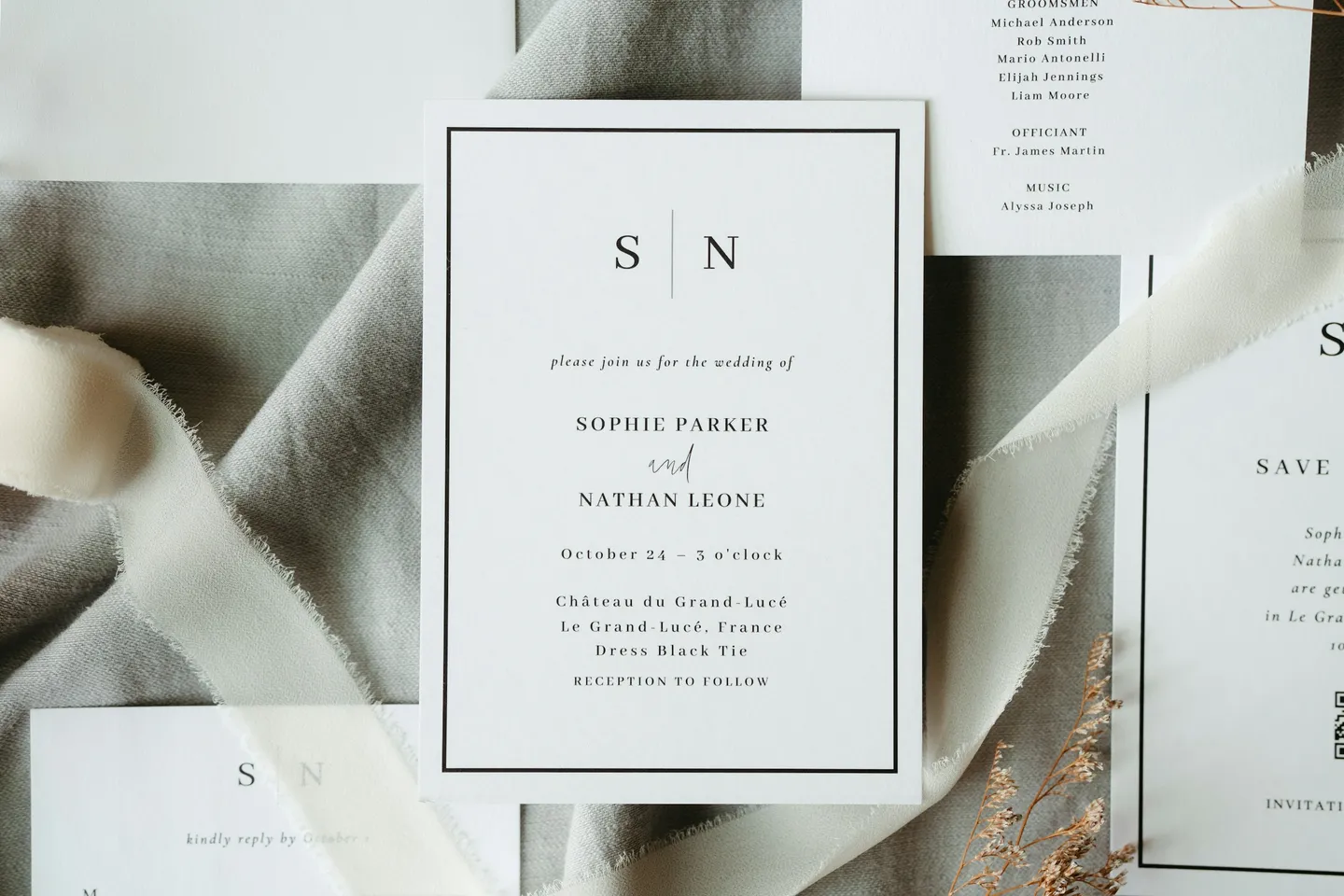
Photo: Micah & Sammie Chaffin / Unsplash. Owner-selected illustrative stationery; not a Belowen template. Source · Reuse authorization.